




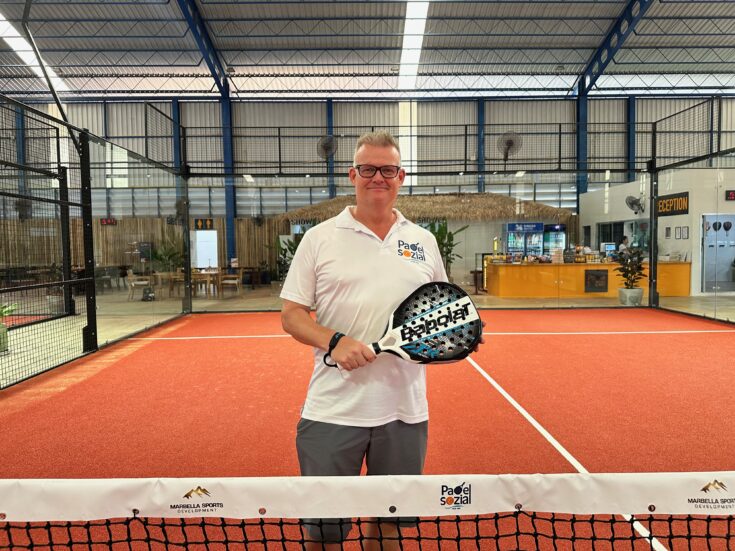
Only a month after opening its doors, Padel Sozial is becoming a place for both playing padel and the padel community in Hua Hin. The centre was founded by three Danish men, who set out to create a padel venue that could bring together both newcomers and experienced players.
Hidden inside a massive warehouse on a quiet residential back street on the outskirts of Hua Hin, the reflecting glass of padel courts can be seen through the bottom of a large garage door.
Come a little closer, and you will hear the soft knock of padel balls hitting the red turf, people laughing and panting, and upbeat music playing in the background.
Inside the anonymous grey building, three Danish men have founded what they hope will become a cornerstone of health, sportsmanship and community in Hua Hin.
From first serve to full commitment
Allan Riber Nielsen is the day-to-day managing director of Padel Sozial, working alongside his wife and five local female employees. He is also the one welcoming me on a Sunday afternoon.
As he shows me around the venue, he tells the story of how it all started.
Back in December, his former work colleague Morten Søegaard presented the idea of a community-based padel centre, and Allan did not hesitate to join the project.
“I had stopped working in China and Bangkok and settled down in Hua Hin with my family. I thought: I haven’t tried that before, but let’s give it a shot,” Allan says.
Allan and Morten needed another partner, so they brought in Kristian Jensen, a Danish friend of Allan’s from the golf community. Their first task was to find a space large enough to accommodate several courts.
Morten, who also owns the interior design and furniture store Ferior Interior in Hua Hin, knew the landlord of a large warehouse that had previously been used for Muay Thai.
“And then we started wondering: how many courts can we have in here? And what is this padel thing? I had heard about it, but I was still quite new to it, especially building a centre,” Allan says.
Allan had never played padel before the courts in Hua Hin were laid, but he has since fallen completely in love with the sport.
“Right now I regret not starting earlier because of how amazing a sport it is. People are addicted to playing, because in padel you’ll begin to feel a bit of success in your games pretty fast,” Allan says.
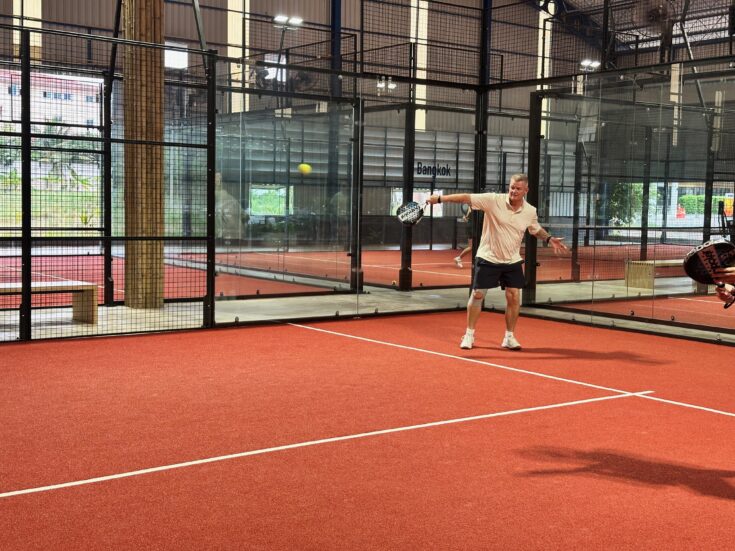
More than just a place to play
Although the founders had little experience with padel as a sport, they had a clear vision of how the centre should feel. The whole point of building it, according to Allan, was to cultivate a space where players could find a community and feel that they had a home.
“This community we’ve built only gets stronger by the day. It’s easy for players to find teammates and opponents because we made groups where people could meet other players and there’s room for everyone here. That’s also the feedback we get from the customers, that they feel welcome even though they’re new,” Allan says.
According to Allan, the “room for everyone” mantra applies not only to newcomers. The centre also caters to more experienced padel players by hosting tournaments and sessions with professional padel players.
“We take care of players that are completely new to the game, but we also offer a place for more experienced players to get even better and improve their ranking,” Allan says.
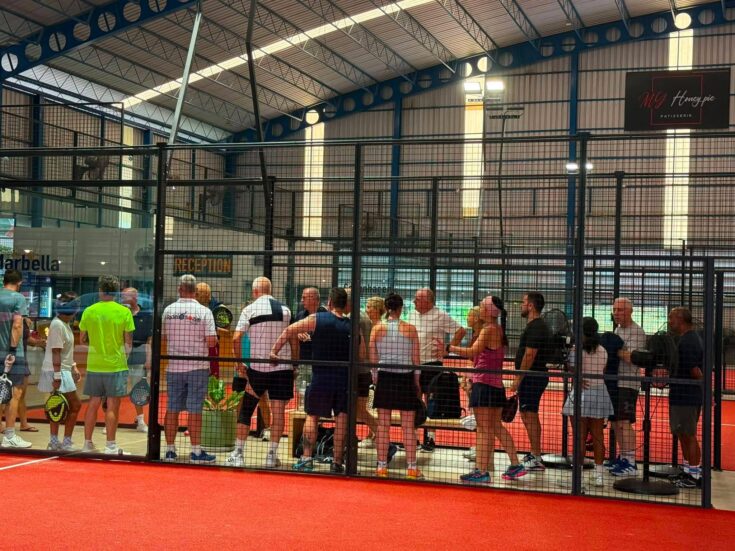
Building a home for padel
Allan describes how the founders wanted the centre to feel homely, while still being professional and optimised for good playing conditions.
The typical blue-coloured padel turf has been replaced with red turf to give the courts a more tennis-like feel, while rotating fans hover above each court.
Between the courts, Scandinavian-style benches and waiting areas are neatly arranged, while tropical plants make the space bright and welcoming. The centre also has a kids’ corner where children can spend time while their parents play.
“First of all, we want to make it clear that we are in Hua Hin and not in Dubai. We didn’t want it to be too clinical and clean. It is a nice and cozy place, and we want this to be the place people come before playing, but also stay after they’ve played,” Allan says.
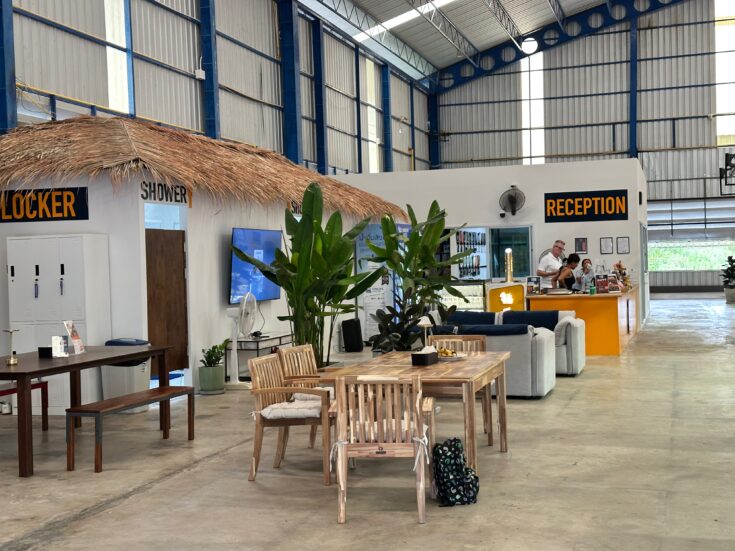
For the design and layout of the courts and equipment, the founders luckily had help from a local professional. Darika Roost, known as Dao, is currently the number one female padel player in Thailand and now the Padel Director at Padel Sozial.
“Dao worked as a freelance padel coach at some other padel centers in Hua Hin, but now we have hired her to manage all the coaching sessions and tournaments here. She’s great,” Allan says.
All the courts are named after major cities, including Copenhagen and Bangkok. On the “Madrid” court, a team of four players are competing against each other. On the adjacent “Marbella” court, Dao is conducting a one-on-one coaching session with a local Thai woman.
After the session, Dao shares what she likes about the sport and the centre.
“I love what I’m doing and I want to share my experience with padel, so people can feel confident on the court. I want to contribute to creating a social community in Hua Hin where people can have fun with the game.”
What comes next?
When asked about the future of Padel Sozial, Allan points to several projects already in the works.
The founders have opened a coffee shop and restaurant inside the centre, giving players a place to enjoy food and drinks before or after their games. If the centre continues to thrive, Allan is also in talks with the other founders about opening centres in other parts of Thailand.
But for Allan, the ambitions go beyond expanding the business. This is also reflected in his working hours, that often reach 15 hours a day all seven days of the week:
“I’m so delighted that I get to do something that makes people get out and use their bodies and live a healthier lifestyle.”
Back inside the warehouse, the games continue. Balls bounce against the glass, players call out to one another and the music carries across the courts.
For three Danish entrepreneurs who entered the project with little experience of padel, the first serve has already turned into something bigger: a place where people come not only to play, but to meet, compete and stay a little longer.
Related posts:
 Did you know H.M. Queen Margrethe and Prince Consort Henrik visited Thailand today
 Padel, the new huge “In Sport” and the fastest, growing sport in the world.
 Treat yourself with Danish-made duck and apple pie at restaurant in Hua Hin
 Got a question for Denmark’s ambassador? Meet him in Hua Hin on Thursday

Check their website: https://padelsozial.com/
Where is it? Location & how to get in touch missing from the article.