


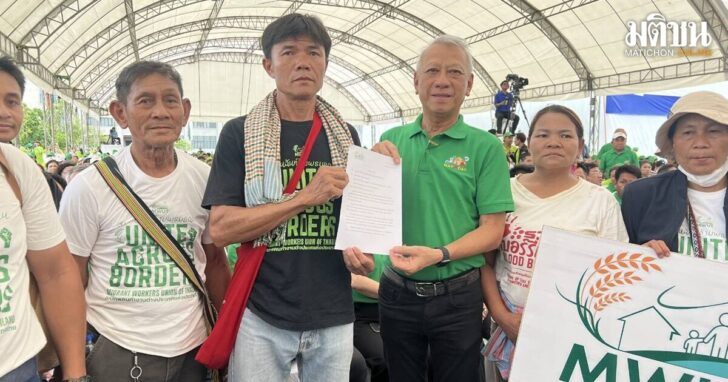
On May 1, 2025, at Lan Khon Mueang in front of the Bangkok City Hall, representatives from the Thai Migrant Workers’ Union, led by Mr. Phaisanti Jumangwa and Ms. Maliwan Wathanu, submitted a petition to Labor Minister Pipat Ratchakitprakarn during the National Labor Day ceremony. They urged the Ministry of Labor to urgently compensate and assist Thai workers who were deceived into forced labor while picking berries in Finland and Sweden.
Ms. Maliwan called on the ministry to accelerate financial aid for these workers, many of whom were lured with promises of decent pay and legal employment but ended up exploited and trafficked. She emphasized that this issue has been raised for over 10 years, yet no agency has stepped in to offer meaningful help.
“We’re calling for responsible agencies—whether it’s the compensation fund, anti-human trafficking units, or others—to intervene. We were trafficked into modern-day slavery, deceived from Thailand all the way to Finland. Even after returning and submitting documents to various agencies, there’s still no real support,” she said.
“It’s like we were producing blood berries. That’s how serious it is. We even had to form the Thai Migrant Workers’ Union just to get this far, but we still haven’t received help.”
She explained that workers were sent through official channels under the Department of Employment (DOE), with employment contracts, training, and income guarantees of €9 per hour or around €1,500 per month (roughly 55,000 baht). They were told the work would only involve berry picking on farms. However, once they arrived, conditions didn’t match the contracts. In Sweden, workers were promised £800 per month but ended up injured and unpaid. Efforts to claim income guarantees failed.
Ms. Maliwan also described poor living conditions, passport confiscation, lack of healthcare, and “fake” contracts. She called it a clear case of human trafficking that has led to the term “blood berries” being used to describe the exploitative industry.
“This isn’t new—it’s been going on for years. We’ve made these demands for more than a decade. And it’s not just one company. When we speak out, they blame us and look down on us for being from Isaan. But we have dignity. We believed the DOE system because we went through their training,” she said.
She also challenged a former labor minister’s claim that only 30 workers were affected, stating there are over 1,000 victims, with total losses exceeding 10 billion baht. She urged officials to see the real conditions on the ground rather than rely on staged presentations by companies.
She also revealed that many workers had 3% interest deducted from their wages, even though the original contracts specified no interest.
Mr. Phaisanti added that Swedish and Finnish authorities have already arrested employers for human trafficking, but Thai authorities have not taken similar action. The companies that sent the workers continue to operate and fight legal battles in Thailand, where the workers are at a disadvantage, often facing powerful opponents like judges or lawyers.
“If they feel like paying, they pay. If not, they don’t. Last year, a Finnish company was arrested for human trafficking, but in Thailand, our petitions were dismissed,” he said.
“Even a professional committee in Chaiyaphum wouldn’t acknowledge this as a trafficking case, despite it being the same company with the same people in charge. Each year, they just change the company name, but the management stays the same. The government, the Ministry of Labor, and the DOE all know, but they do nothing. They let the same people repeat the same crimes—just under a new company name.”