




At around 34 kilometres, marathon runners normally “hit the wall”. The moment where the body begins to shut down and every step feels heavier than the last.
At the Great Wall Marathon in China, that is also exactly where runners are forced back onto the steep stone steps of the Great Wall itself.
“It’s where runners hit the mental wall, and then immediately face a physical wall too,” said Lars Fyhr, Race and Event Director at Danish travel company Albatros Adventure.
One of the world’s toughest marathons
On Saturday, May 16, nearly 1,300 runners from 54 countries will take part in the brutal race outside Beijing, including 36 runners from Denmark, 12 Norwegians, 11 Swedes and two Finns.
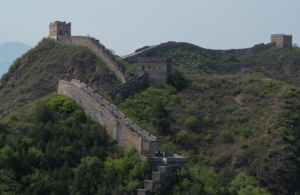
The marathon, first launched by Danish travel company Albatros in 1999, has become internationally known for its punishing route across thousands of uneven stone steps on the Huangyaguan section of the Great Wall.
According to a 2026 ranking by Runner’s World, the race is now officially considered the world’s second toughest marathon – beaten only by the Everest Marathon in Nepal.
Participants range from a five-year-old girl running the Fun Run with her parents to a 78-year-old participant also taking part in the shorter race.
Few runners quit
The race takes runners across 5,164 steps of varying height and depth, often under intense heat.
While few runners actually give up, medical teams regularly treat dehydration and injuries during the event.
“Our doctors usually have to put several dehydrated runners on IV drips, and falls and scrapes are also quite common,” Lars Fyhr added.
Chinese Blue Sky Rescue teams are stationed along the wall and can carry exhausted runners down if they are unable to continue.
“This is not a race where people chase personal records. Most want the full experience and run sensibly,” he explained.
Started as a one-time event
The marathon was originally created as a one-time stunt to promote China travel to Danes.
Albatros founder Søren Rasmussen travelled to China in the late 1990s searching for a spectacular location and eventually chose Huangyaguan as the ideal marathon route.
Around 400 Danish runners travelled to China for the first race in 1999, with Danes making up around 95 percent of participants.
“The high number of runners made Søren realise there was probably more to it than just a one-time event, and we have organised it every year since – only interrupted by SARS in 2003 and Covid-19 between 2020 and 2023,” Lars Fyhr said.
Today, the event attracts runners from all over the world, though Nordic participation remains strong.
Registration for this year’s race is closed.