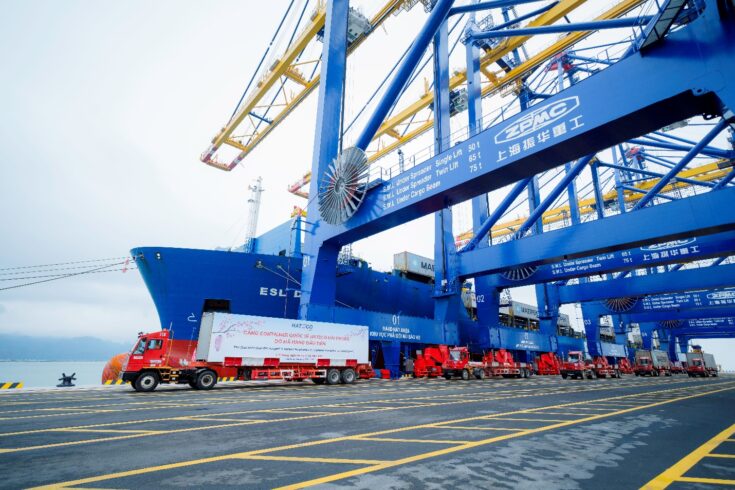



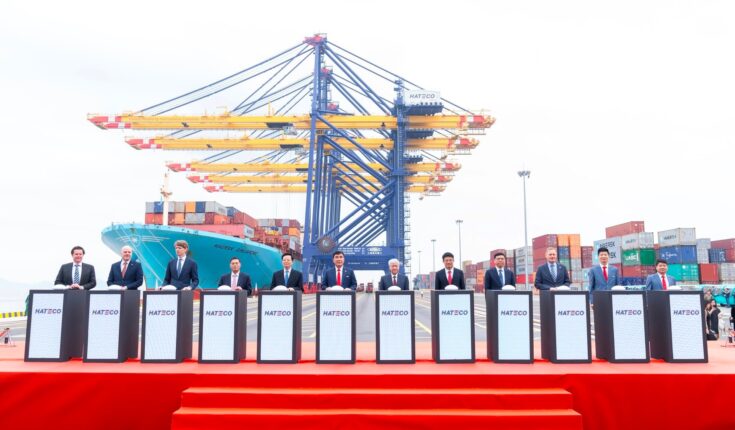
The Hateco Hai Phong International Container Terminal (HHIT) was officially inaugurated on April 5 after more than 30 months of rapid construction. More than just a breakthrough infrastructure project in Vietnam’s private sector, HHIT stands as a new symbol of the strategic partnership between Vietnam and Denmark -particularly in sustainable development and logistics.
Developed by Hateco Group with strategic cooperation from APM Terminals – a subsidiary of Denmark’s A.P. Moller – Maersk Group- HHIT is now considered the most modern deep-sea container port in northern Vietnam. With a designed capacity of 2.2 million TEUs per year, the terminal can accommodate ultra-large container vessels of up to 200,000 DWT and 400 meters in length, enabling direct connections to long-haul maritime routes such as the U.S. East and West coasts.
Strategic Partnership Between Maersk and Hateco
HHIT is the first port in Vietnam to implement a smart port model, integrating high levels of automation. The facility is equipped with 10 STS quay cranes, 36 electric e-RTG yard cranes, 1,350 reefer plugs, and a TOS (Terminal Operating System) for full-scale operational control. Features like the TAS truck appointment system and QR/OCR scanning technologies enhance operational efficiency, minimize waiting times, and ensure transparency.
Speaking at the inauguration ceremony, Danish Ambassador to Vietnam Nicolai Prytz emphasized the project’s significance for Vietnam’s sustainable development goals and Denmark’s business contributions:
“HHIT is a vivid testament to the strong ties between our two countries, focusing on the green transition,” the Ambassador said.
“The application of advanced, automated, and energy-efficient technologies not only boosts operational performance but also aligns with Vietnam’s net-zero emissions commitment. This is a prime example of green strategic cooperation between Vietnam and Denmark.”
A.P. Moller – Maersk has long been a global pioneer in decarbonizing logistics and maritime transport. Through APM Terminals, Maersk not only transfers technology and expertise to Vietnamese partners but also fosters environmentally friendly port development, contributing to a greener supply chain across Southeast Asia.
At the event, Hateco Group and APM Terminals signed a long-term Memorandum of Understanding, focusing on two core areas: port development and logistics services.
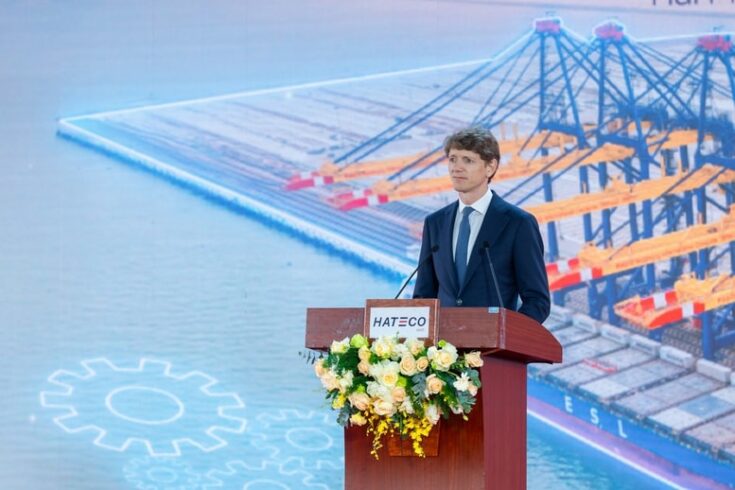
Robert Uggla, Chairman of A.P. Moller – Maersk, affirmed:
“The most modern deep-sea container terminal in northern Vietnam will support businesses, create jobs, and connect Vietnam to the world more efficiently, cost-effectively, and sustainably. We are committed to standing alongside Hateco and Vietnam, sharing best practices and experience to build a robust and sustainable logistics ecosystem in the region.”
Bringing HHIT into operation not only marks a significant milestone for Hateco, but also reflects Maersk’s long-term vision and determination to expand its footprint in Vietnam – an increasingly vital link in global supply chains.
A New driver for maritime economy and green investment
The HHIT project is part of the master plan for the Lach Huyen Port area in Hai Phong, which the Vietnamese Government has designated as a key international gateway integrating container, bulk cargo, passenger, and transshipment logistics terminals. According to Nguyen Duc Tho, Vice Chairman of the Hai Phong People’s Committee, cargo throughput via the city’s seaport system has been growing at an average of 12-15% per year and is expected to reach 212 million tonnes in 2025.
Deputy Minister of Transport Nguyen Xuan Sang underscored the crucial role of private sector investment and international cooperation in Vietnam’s maritime infrastructure strategy:
“The launch of HHIT is strong evidence of the Government’s sound policy in attracting private investment to seaport infrastructure, especially from strategic foreign partners like Maersk.”
The inauguration of HHIT is not only a major infrastructure milestone but also a significant step forward in Vietnam – Denmark relations. As both countries deepen their green strategic partnership, projects like HHIT exemplify the spirit of joint development toward sustainability, efficiency, and environmental responsibility.