



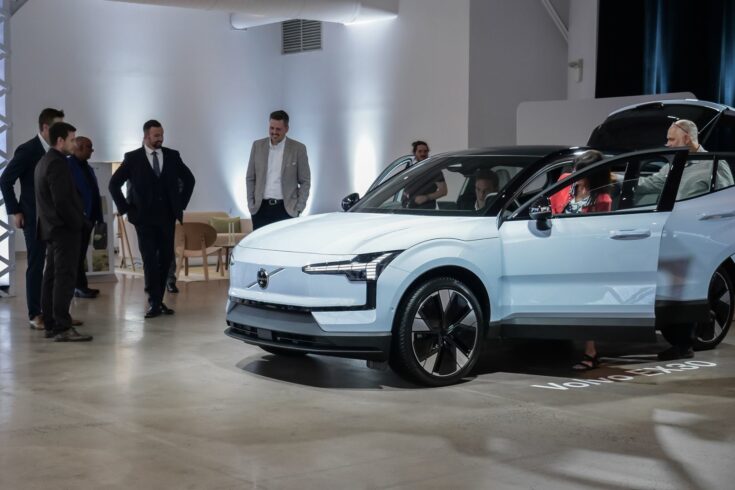
Volvo, the Swedish automaker owned by China’s Zhejiang Geely Holding Group, has announced plans to shift the production of its EX30 and EX90 electric vehicle (EV) models from China to its facility in Ghent, Belgium. The decision comes as Volvo anticipates potential European Union tariffs on Chinese-made EVs and faces increasing competition in the Chinese automotive market.
In a recent financial disclosure, Volvo reported a 28% decline in fourth-quarter profits, partly attributed to a $155.6 million impairment related to its joint venture with Swedish battery developer Northvolt. The company also noted slight decreases in sales within China and the United States, reflecting broader market challenges.
Volvo CEO Jim Rowan emphasized the company’s efforts to enhance cost efficiencies and safeguard cash flow, acknowledging that demand for cars is not expected to grow at the same pace as in previous years. He also stated that Volvo could increase output at its South Carolina plant if necessary.
Another factor influencing the move is the European Commission’s investigation into whether Chinese-made electric vehicles receive distortive subsidies, which could lead to additional trade barriers. By shifting production to Belgium, Volvo aims to mitigate potential tariff risks and align its manufacturing closer to its key markets.
Despite these adjustments, Volvo remains committed to its electrification strategy, aiming for 90-100% of its sales to be electric or plug-in hybrid vehicles by 2030. The company continues to invest in hybrid technology and sees strong demand for premium EVs, maintaining a 20% gross margin in the second quarter.
Volvo’s strategic shift reflects the challenges Nordic businesses face in the Chinese market as they navigate shifting trade policies and competitive pressures in the global EV industry.